Yoga Nidra vs. Meditation: Key Differences Explained
If you’ve ever wondered about the difference between Yoga Nidra vs meditation, you’re not alone. While both are powerful practices for calming the mind and supporting nervous system health, Yoga Nidra offers a unique experience that sets it apart from traditional seated meditation. In this post, we’ll explore the key differences and help you decide which practice is right for your current needs.
6 Differences: Yoga Nidra vs Traditional Meditation
1. Body Position: Reclining vs. Seated
One of the most immediate differences is the posture:
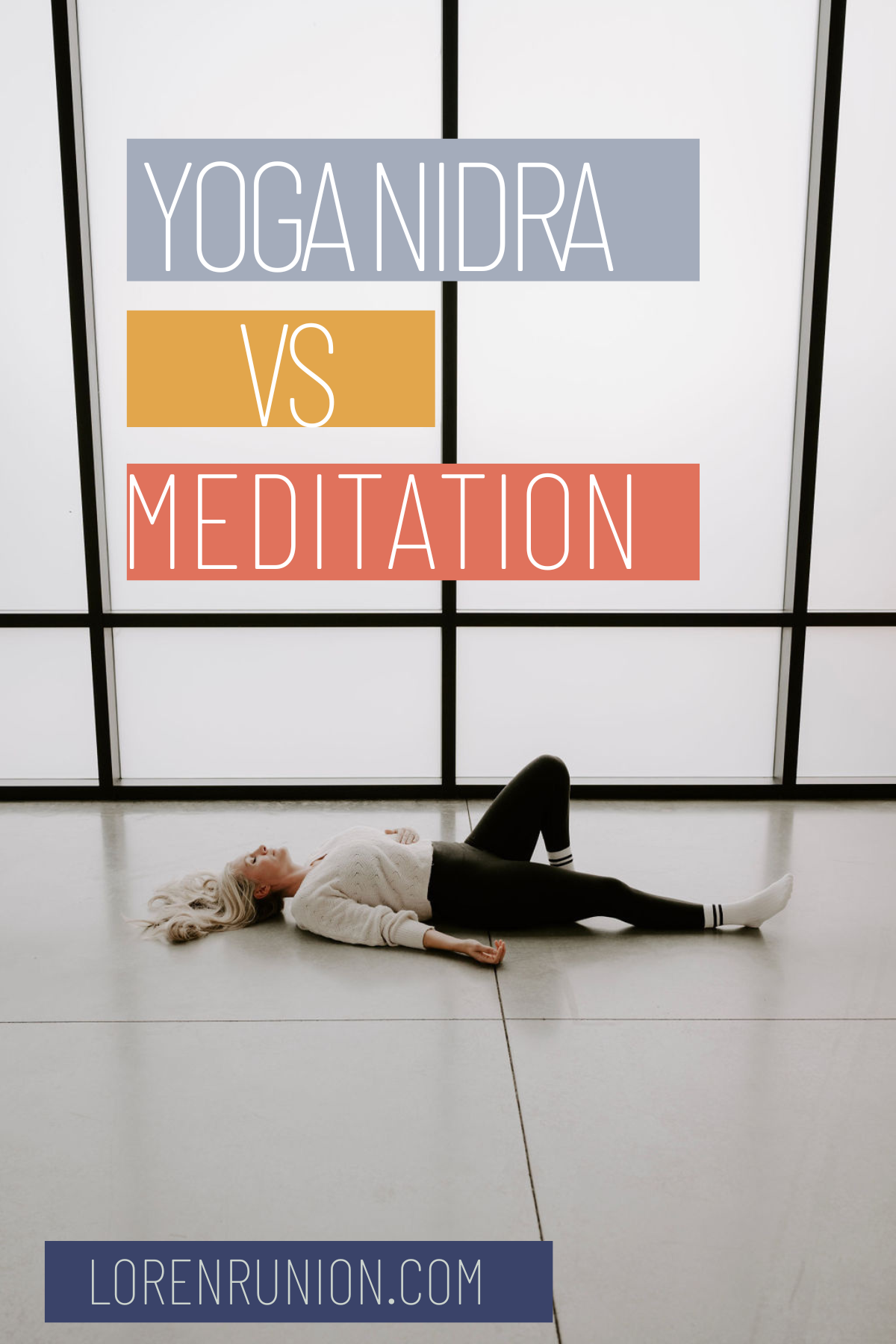
- Yoga Nidra is always practiced lying down, allowing the body to fully relax and release into the support of the ground.
- Traditional meditation is typically done seated, requiring more effort to maintain an upright posture.
This reclining position in Yoga Nidra is intentional—it signals to your body and brain that it’s safe to rest, helping you access deeper brain wave states.
2. Goal: Conscious Relaxation vs. Focused Attention
- Yoga Nidra aims to guide you into a state of conscious rest. You’re invited to let go of control, drop into deeper layers of awareness, and allow the body and mind to repair and reset.
- Traditional meditation often asks you to focus your attention—on the breath, a mantra, or a sensation—and redirect your awareness when it wanders.
While both involve awareness, Yoga Nidra is more about effortless awareness, while traditional meditation requires more mental discipline.
3. Brain Wave States of Yoga Nidra vs Traditional Meditation
Yoga Nidra is uniquely structured to guide you through specific brain wave states:
- Beta (alert, thinking)
- Alpha (relaxed)
- Theta (meditative, dreamy)
- Delta (deep, healing rest)
Traditional meditation often keeps you hovering in Alpha and sometimes Theta, but rarely dips into Delta. Yoga Nidra takes you into the same brain states as deep sleep—without losing conscious awareness.
Read more about Yoga Nidra and Brain waves here!
4. Structure and Guidance
- Yoga Nidra is a fully guided, structured practice. There’s a specific sequence: intention setting (sankalpa), body scan, breath awareness, visualization, and rest.
- Traditional meditation can vary widely, but many forms are self-directed and less scripted.
For beginners or those with anxious minds, Yoga Nidra’s structure provides a supportive container to relax into.
5. Accessibility and Ease
- Yoga Nidra is often described as “meditation for people who can’t meditate.”
- If you find it hard to sit still, focus, or quiet your mind, Yoga Nidra might feel easier and more nourishing.
Because you’re lying down and being guided the whole time, it removes a lot of the pressure people feel when meditating.
6. Benefits: Similar Roots, Different Gifts
Both practices offer incredible benefits:
- Reduced stress and anxiety
- Improved sleep
- Emotional resilience
- Increased self-awareness
But Yoga Nidra also offers:
- Deep nervous system regulation
- Access to the subconscious mind
- Profound rest in a short amount of time
Final Thoughts
Traditional meditation and Yoga Nidra are like two different paths to the same mountain top—both lead you inward, but the journey feels different.
If you’re feeling burnt out, wired and tired, or just overwhelmed by life, Yoga Nidra might be the gentler, more accessible way in. And once you experience that level of rest and inner stillness, you might just fall in love with the practice.
Looking for a place to start? Download my yoga nidra app and get 8 free meditations to practice anytime!
Download the only yoga nidra app designed to balance your nervous system and align your meditations with your life. Intentionology Yoga Nidra App for Apple and Android
Practice Yoga Nidra with me!


