
From Stress to Serenity: Self-Care To Regulate Your Nervous System
In this post, you will learn self-care practices that help regulate the nervous system so you can impact your stress level and overall well-being. Learning to implement self-care into your day is about way more than massages and facials, it is about improving your entire body with simple practices that make a huge impact/.

The nervous system is a complex network of cells and nerves that transmit signals between different parts of the body. It is responsible for regulating a wide range of bodily functions, including breathing, heart rate, digestion, and movement.
When the nervous system is functioning properly, we feel calm, focused, and energized. However, when we are under stress or facing challenging situations, our nervous system can become dysregulated, leading to feelings of anxiety, overwhelm, and exhaustion.
This is where self-care comes in – by engaging in practices that help regulate the nervous system, we can promote greater calm, resilience, and overall well-being.
5 Ways Self-Care Regulates the Nervous System
- Promoting relaxation: Self-care practices such as deep breathing, meditation, and yoga can help to activate the parasympathetic nervous system, which is responsible for promoting relaxation and rest. When we are in a state of relaxation, our breathing slows down, our heart rate decreases, and our muscles relax. This helps to reduce feelings of stress and tension in the body, which in turn can promote greater feelings of calm and well-being.
- Improving sleep: Getting adequate rest is crucial for promoting a healthy nervous system. When we are sleep deprived, our body’s stress response can become dysregulated, leading to increased feelings of anxiety and overwhelm. Engaging in self-care practices such as creating a consistent sleep routine, avoiding caffeine and electronics before bed, and practicing relaxation techniques can help to promote better sleep and improve overall nervous system health.
- Boosting mood: Engaging in activities that bring us joy and fulfillment can have a positive impact on our nervous system health. When we experience pleasure and happiness, our body releases feel-good hormones such as dopamine and serotonin, which can help to reduce feelings of stress and anxiety. This can promote greater emotional resilience and well-being, helping us to better navigate challenging situations.
- Reducing inflammation: Chronic stress has been linked to increased levels of inflammation in the body, which can lead to a wide range of health problems. Engaging in self-care practices such as eating a healthy diet, getting regular exercise, and reducing exposure to toxins can help to reduce inflammation and promote better nervous system health.
- Enhancing social connections: Humans are social creatures, and social support has been shown to be a key factor in promoting overall health and well-being. Engaging in self-care practices that promote social connections, such as spending time with loved ones, joining a community group, or participating in team sports, can help to regulate the nervous system by reducing feelings of loneliness and promoting a sense of belonging.
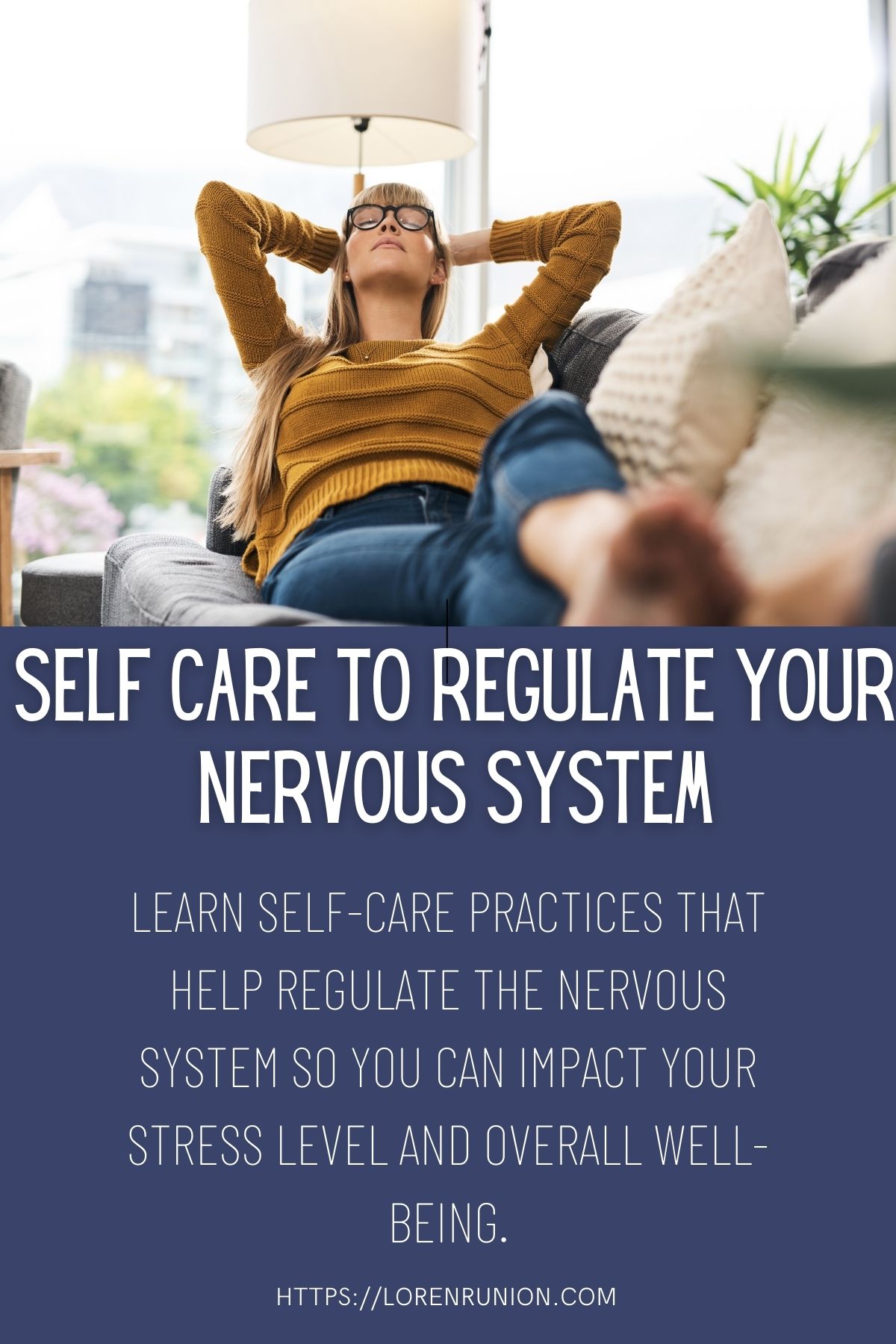
8 Self-Care Practices to Regulate Your Nervous System
Overall, engaging in self-care practices can have a powerful impact on nervous system health. By promoting relaxation, improving sleep, boosting mood, reducing inflammation, and enhancing social connections, we can support our body’s natural ability to regulate stress and promote greater well-being.
Here are some specific self-care practices that can be particularly helpful for regulating the nervous system:
1- Slow Deep Breathing
Deep breathing exercises, such as diaphragmatic breathing or alternate nostril breathing, can help to activate the parasympathetic nervous system and promote feelings of calm and relaxation.
Here are three deep breathing exercises that can help you feel calm:
- Belly breathing: Place one hand on your belly and one hand on your chest. Inhale deeply through your nose, allowing your belly to expand as you breathe in. Exhale slowly through your mouth, allowing your belly to gently deflate. Repeat this breathing pattern for several minutes, focusing on the sensation of your breath moving in and out of your body.
- 4-7-8 breathing: Inhale deeply through your nose for a count of four. Hold your breath for a count of seven. Exhale slowly through your mouth for a count of eight. Repeat this breathing pattern for several minutes, focusing on the feeling of your breath and the counting rhythm.
- Alternate nostril breathing: Place your right thumb over your right nostril and inhale deeply through your left nostril. Hold your breath for a moment, then use your ring finger to close your left nostril and exhale through your right nostril. Inhale through your right nostril, hold your breath, then close your right nostril with your thumb and exhale through your left nostril. Repeat this pattern for several minutes, focusing on the sensation of your breath and the alternating nostril pattern.
2- Yoga
Yoga combines movement, breath, and mindfulness to promote greater physical and mental well-being. Regular yoga practice has been shown to reduce stress and anxiety, improve sleep, and enhance overall nervous system health.
Choosing yoga asana classes like slow yoga, restorative yoga, and yin classes can be the most beneficial for someone who is looking to decrease stress by regulating the nervous system.
3- Meditation
Meditation is a powerful tool for promoting relaxation and reducing stress. Regular meditation practice has been shown to improve mood, reduce symptoms of anxiety and depression, and promote greater emotional resilience.
My favorite form of meditation is a practice called yoga nidra. It is a transformative meditation style that is effortless even for first-time meditators.
Try how simple adding meditation is into your day and the powerful impact it can have on your nervous system with the yoga nidra below.
4- Self Massage
Self-Massage can help to reduce muscle tension, improve circulation, and promote relaxation. There is no need to worry about affording a massage (although that can be nice it isn’t practical for a lot of people).
Face yoga is a great way to add in self-massage and promote greater overall well-being. This calming acupressure and face massage video below is also combined with meditation so you are getting a lot of bang for your buck with one calming class.
Another way to add in self-massage and release tension is to use tennis balls or lacrosse balls.
5- Nature Exposure
Spending time in nature can have a powerful impact on nervous system health. Research has shown that exposure to natural environments can help to reduce feelings of stress and anxiety, improve mood, and promote greater overall well-being. Whether it’s taking a walk in the park, going for a hike, or simply sitting outside in a natural setting, incorporating nature exposure into your self-care routine can have a positive impact on your nervous system.
Being in nature allows us to disconnect from the stresses and distractions of everyday life and connect with our natural surroundings.
Studies have shown that spending time in nature can reduce stress and anxiety, lower blood pressure and heart rate, and improve mood and overall feelings of well-being. Nature exposure can also promote physical activity and exercise, which can have numerous health benefits.
In addition to the physical benefits, being in nature can also have a positive impact on our mental and emotional health. Nature exposure has been shown to reduce symptoms of depression and anxiety and improve cognitive function and creativity.
Taking the time to engage with nature can also be a form of self-reflection and introspection. Being in nature can provide us with a sense of perspective and help us feel more connected to something larger than ourselves, which can be particularly helpful during times of stress or uncertainty.
Overall, spending time in nature can be a powerful form of self-care, allowing us to recharge, rejuvenate, and improve our overall well-being.
6- Creative expression
Engaging in creative activities such as painting, writing, or playing music can help to promote relaxation and reduce stress. Creative expression has been shown to promote feelings of joy and fulfillment, which can have a positive impact on nervous system health.
Below you can find a video on how to use creative expression for self-care as well as help you let go.
7- Mindful movement:
Activities such as tai chi or qigong combine movement and mindfulness to promote greater physical and mental well-being. Regular practice of these activities has been shown to reduce stress and anxiety, improve balance and coordination, and enhance overall nervous system health.
8- Mindful eating
Eating a healthy, balanced diet that is rich in whole foods can help to promote nervous system health by reducing inflammation and promoting optimal digestion. Additionally, practicing mindful eating, such as savoring your food and paying attention to hunger and fullness cues, can help to promote greater overall well-being.
Mindful eating is a form of self-care because it involves paying attention to and being present in the act of eating. Rather than mindlessly consuming food, mindful eating involves being fully aware of the taste, smell, texture, and other sensory experiences of the food, as well as the thoughts and feelings that arise during the eating process.
When we practice mindful eating, we are taking the time to care for ourselves by nourishing our bodies and minds. By focusing on the experience of eating and being fully present at the moment, we can become more attuned to our body’s needs and signals, such as hunger and fullness. This can help us make more informed and intentional choices about what we eat, and can also lead to a greater appreciation and enjoyment of food.
Mindful eating can also be a form of self-compassion, as it involves approaching ourselves and our bodies with kindness and non-judgment. By being mindful and present during meal times, we can reduce stress and anxiety related to food and eating, and develop a more positive relationship with our bodies and food. Ultimately, mindful eating can support our overall well-being and contribute to a more balanced and fulfilling life.
Tips for adding in self-care
Incorporating self-care practices into your daily routine can have a powerful impact on nervous system health. By promoting relaxation, improving sleep, boosting mood, reducing inflammation, enhancing social connections, and engaging in specific self-care practices such as deep breathing, yoga, meditation, massage, nature exposure, creative expression, mindful movement, and mindful eating, you can support your body’s natural ability to regulate stress and promote greater overall well-being.
Start with these tips:
- It’s important to start by defining what self-care means to you.
- Ensure that your self-care is a true act of nourishing your mind body and soul, not binge-watching tv.
- Let go of any “should” when it comes to self-care that regulates your nervous system. There are no shoulds on how often, how long, or what it looks like as long as you are taking time to add it in.
So why not make self-care a priority in your life today? Your nervous system will thank you for it!

